
Gwladys Street Community Primary and Nursery School is proud to announce that we achieved the SILVER Liverpool Maths Quality Mark. Thank you to all the pupils, parents, governors and staff who made this happen!

Intent
At Gwladys Street Community Primary and Nursery School, our intent is to provide an ambitious, inclusive and carefully sequenced Mathematics curriculum that enables every pupil to develop secure mathematical knowledge, understanding and confidence.
We want all children to leave our school with strong mathematical foundations, secure knowledge of number and calculation, the ability to reason and solve problems, and the resilience to persevere when faced with challenge. We aim to develop positive attitudes towards Mathematics so that pupils become curious, confident and enthusiastic mathematicians who recognise the importance of Mathematics in everyday life.
Our curriculum is designed to ensure that mathematical knowledge and skills build progressively from Nursery to Year 6. New learning builds on prior knowledge, with important concepts revisited and developed over time so that pupils remember more and can apply their learning with increasing independence.
We aim to:
- Foster curiosity and develop positive attitudes towards Mathematics that will remain with pupils throughout their lives.
- Develop secure mathematical foundations, particularly in number, calculation and mathematical fluency.
- Develop pupils’ ability to reason, explain their thinking and use appropriate mathematical vocabulary.
- Provide regular opportunities for pupils to solve problems and apply their mathematical knowledge in different contexts.
- Help pupils make connections between different areas of Mathematics and recognise how their learning builds over time.
- Provide meaningful opportunities for pupils to recognise and apply Mathematics in everyday life and across the wider curriculum.
- Develop resilient learners who are willing to make mistakes, learn from them and persevere when faced with mathematical challenge.
- Ensure that all pupils, including those with SEND and those who may experience barriers to learning, have access to the same ambitious mathematical curriculum, with appropriate adaptations and support where required.
We believe Mathematics provides children with essential life skills, including:
- understanding number and calculation;
- mathematical fluency;
- problem solving;
- reasoning;
- enquiry and mathematical thinking;
- communicating and explaining mathematical ideas.
Our ultimate aim is for every pupil to leave Gwladys Street believing that they can do Mathematics, understanding its purpose and being equipped with the mathematical knowledge and skills they need for the next stage of their education and for adult life.
Implementation
At Gwladys Street, Mathematics is taught regularly and systematically from Nursery (F1) to Year 6. Our curriculum follows the Early Years Foundation Stage Statutory Framework and the National Curriculum and is carefully planned to ensure progression in knowledge and skills.
The curriculum is sequenced so that pupils build on what they have previously learned. Teachers use their knowledge of pupils’ starting points and prior learning to identify the essential knowledge pupils need to acquire and remember.
Early Years Foundation Stage
In Nursery (F1) and Reception (F2), our Mathematics curriculum is based on the EYFS Statutory Framework and Development Matters.
Children develop strong mathematical foundations through a combination of explicit teaching, practical experiences, high-quality interactions and purposeful opportunities to use Mathematics within their play and everyday experiences.
Particular emphasis is placed on developing children’s understanding of number, numerical patterns, mathematical language, comparison, counting and the foundations of calculation.
Key Stages 1 and 2
From Year 1 to Year 6, we use Power Maths as our core Mathematics programme. This provides a coherent structure for teaching and supports the progression of mathematical knowledge and skills across the school.
Teachers adapt and supplement the programme where appropriate to meet the needs of their pupils and ensure that the intended learning is secured.
Our ongoing engagement with the DfE-funded Maths Hubs programme supports teachers in developing their mathematical subject knowledge and understanding of effective Mathematics pedagogy.
Teaching and Learning
Our Mathematics lessons provide opportunities for pupils to:
- recall and practise important mathematical knowledge;
- develop new concepts through carefully chosen models and representations;
- use concrete resources and visual representations where appropriate;
- develop mathematical vocabulary and communicate their ideas;
- reason and explain their thinking;
- make connections between mathematical concepts;
- practise independently and collaboratively;
- apply their knowledge to increasingly challenging problems;
- reflect on their learning and identify and correct misconceptions.
We place a strong emphasis on mathematical talk. Pupils are encouraged to explain their methods, justify their answers, listen to the ideas of others and use appropriate mathematical vocabulary.
Pupils regularly work collaboratively, including in mixed-attainment pairs where appropriate, allowing them to share strategies, discuss ideas and develop their mathematical reasoning in a supportive environment.
Teachers use formative assessment throughout lessons to check pupils’ understanding and identify misconceptions. Teaching is adapted responsively so that pupils receive further explanation, modelling, practice or challenge when required.
Lesson Structure
Our Power Maths lessons generally include the following elements:
Power Up – opportunities to revisit and practise previously taught knowledge and develop fluency.
Discover – introduction and exploration of new mathematical ideas, supported by appropriate models, representations and mathematical vocabulary.
Share – pupils explain, discuss and compare mathematical methods and ideas.
Think Together – pupils work collaboratively and develop their reasoning and problem-solving skills.
Practice – pupils apply and practise their learning independently, with appropriate support or challenge.
Reflect – pupils consider what they have learned, explain their understanding and identify any misconceptions or areas requiring further practice.
The structure of a lesson is adapted by teachers according to the mathematical content, pupils’ starting points and the intended learning. Our focus is always on securing the mathematical knowledge and understanding identified in the curriculum rather than following a lesson structure for its own sake.
Developing Mathematical Fluency
We recognise that secure foundational knowledge is essential for pupils to access increasingly complex mathematical learning.
In EYFS and Key Stage 1, we use the NCETM Mastering Number programme alongside our main Mathematics curriculum. This supports pupils to develop firm foundations in number, fluency and number sense.
In Years 3, 4 and 5, we also use the NCETM Mastering Number programme to strengthen pupils’ understanding of multiplicative relationships and support fluency with multiplication and division facts.
These sessions provide additional opportunities to secure essential knowledge so that pupils can draw on it confidently when reasoning and problem solving.
Inclusion
Mathematics is an entitlement for every pupil. We maintain high expectations for all learners, including disadvantaged pupils and pupils with SEND.
Teachers use their knowledge of pupils’ needs and prior learning to adapt teaching and remove barriers to learning. This may include additional modelling, concrete resources, visual representations, vocabulary support, targeted questioning, guided practice or additional teaching.
Adaptations are designed to enable pupils to access the ambitious curriculum rather than reduce expectations.
Where pupils have gaps in foundational mathematical knowledge, these are identified promptly and addressed through responsive teaching and targeted support. Our priority is to help pupils keep up with the curriculum, rather than allowing gaps to become embedded.
Impact
The impact of our Mathematics curriculum is reflected in pupils’ developing knowledge, understanding, confidence and ability to apply Mathematics.
Through effective teaching and regular formative assessment, teachers continually check what pupils know and understand. This enables misconceptions to be addressed promptly and informs subsequent teaching.
We expect pupils to:
- remember and apply important mathematical knowledge;
- develop increasing fluency and accuracy;
- use mathematical vocabulary confidently;
- explain and justify their mathematical thinking;
- make connections between different areas of Mathematics;
- apply their knowledge to solve problems in familiar and unfamiliar contexts;
- demonstrate resilience when faced with challenge;
- become increasingly independent in their mathematical thinking.
Teachers use a range of evidence to understand pupils’ learning, including questioning, discussion, observation, pupils’ explanations, independent work and summative assessments.
Formal assessments take place at appropriate points throughout the academic year. Where used, assessment information and Question Level Analysis help teachers identify areas of strength and gaps in knowledge and support professional discussions about pupils’ learning.
Assessment information is considered alongside teachers’ day-to-day knowledge of pupils rather than being used in isolation. It helps teachers identify concepts that require further teaching, pupils who may benefit from targeted support and areas where teaching approaches may need to be adapted.
Responsive Support
Where pupils have not yet secured important mathematical knowledge, teachers respond through further teaching and practice. Depending on the need, this may include:
- whole-class re-teaching where a misconception is common;
- small-group support;
- individual support;
- additional practice of key knowledge;
- carefully chosen representations and resources;
- targeted questioning and teacher modelling.
The purpose of this support is to address gaps quickly and enable pupils to successfully access subsequent learning.
Monitoring and Evaluation
The quality of Mathematics education is monitored regularly by school leaders and the Mathematics subject leadership team.
This includes:
- reviewing the progression and sequencing of the Mathematics curriculum;
- lesson visits and learning walks;
- discussions with pupils and staff;
- reviewing pupils’ work and what it demonstrates about their learning;
- consideration of assessment information;
- monitoring the progress and achievement of different groups of pupils;
- evaluating the effectiveness of adaptations and targeted support;
- supporting teachers’ subject knowledge and professional development.
This information is used to identify strengths and areas for development and to ensure that the Mathematics curriculum continues to meet the needs of our pupils and reflects effective practice.
Our Measure of Success
Ultimately, the success of our Mathematics curriculum is demonstrated through what pupils know, remember and can do.
We want pupils to leave Gwladys Street with secure mathematical foundations, confidence in their own ability, a willingness to reason and solve problems, and a positive attitude towards Mathematics.
We want every child to understand that Mathematics is both something they can succeed in and something that has a meaningful purpose in their everyday lives.
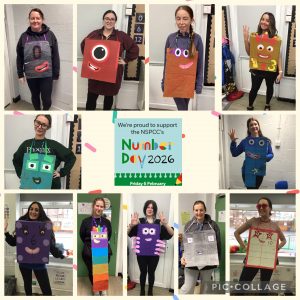
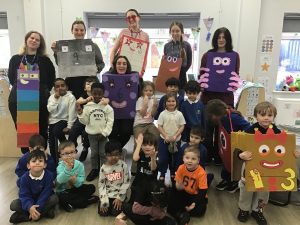
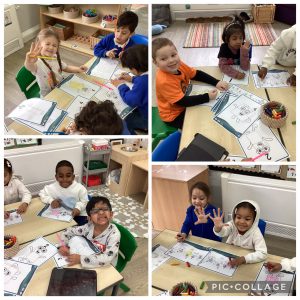
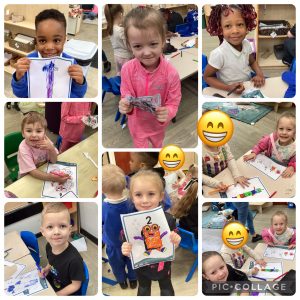
Check out our Reception classes exploring numbers and taking part in dress-up as part of Number Day!
Home Learning Links
Times Table Rock Stars – https://play.ttrockstars.com/auth/school/student/33534
Numbots – https://play.numbots.com/#/account/school-login/33534
https://www.multiplication.com/games/multiplication-games
https://www.topmarks.co.uk/maths-games/3-5-years/counting
https://www.topmarks.co.uk/maths-games/5-7-years/counting
https://www.topmarks.co.uk/maths-games/7-11-years/ordering-and-sequencing
Parent Support
https://www.nationalnumeracy.org.uk/
Financial Education
https://www.justfinancefoundation.org.uk/milos-money-teaching-resource
https://www.justfinancefoundation.org.uk/
https://natwestthrive.com/about-thrive/parents-and-guardians
Curriculum and Policies
Long Term Whole School Maths Year 1 to Year 6
Power Maths Reception Calculation Policy
Power Maths White Rose Edition KS1 Calculation Policy